

Getting data from blockchain efficiently is a big challenge for Web3. The Graph protocol is an open-source solution. It makes it easy to search on-chain data, which is key for apps to work well.
This system is like the “Google of blockchains.” It gives one place to find organised data. Developers can make cool apps without worrying about complex systems. It makes blockchain data easy to use.
The Graph creates a strong, decentralised data market. This solves a big problem of getting to data. It helps make apps that need up-to-date, trustworthy info. This makes it very important in the crypto world today.
That broader market context also helps when evaluating bots for crypto, especially where AI, automation, and speculation start to overlap.
The Data Dilemma in Web3: Why Indexing Matters
In Web3, a big problem exists: blockchains are open books, but their data is hard to use. This makes it hard to innovate. Blockchain data indexing is key to making these records useful for apps.
The Inefficiency of Raw Blockchain Data
Imagine a huge library where all books are mixed together. This is what developers face with raw blockchain data. Finding specific info, like a user’s NFTs, is like searching a huge pile of books.
Limitations of Direct Node Queries for Applications
Directly asking a blockchain node for data is slow and uses a lot of resources. It’s not good for apps that need data fast. The problems are big:
- Performance: Simple queries can take minutes, ruining the user experience.
- Complexity: Developers must write special code to sort and combine raw data.
- Cost: Running full nodes for queries costs a lot and needs a lot of infrastructure.
The Pre-Graph Landscape: Centralised and Cumbersome
Before decentralised indexing, developers were stuck. Building their own index was huge work. Or they had to use services that went against Web3’s spirit.
Reliance on Proprietary APIs and Central Servers
Many used centralised services with their own APIs. This made things unstable. Apps relied on one company’s servers, which was risky. If the API failed, the app crashed. It also gave control to a single entity, which was against decentralisation.
A strong, decentralised indexing solution was needed. The old ways were slow or against Web3’s values, holding back the open web.
Introducing The Graph: The Decentralised Data Indexing Protocol
Imagine a global, open library for blockchain data. Any developer can find what they need here. The Graph aims to do this, turning raw blockchain data into a useful resource.
Core Purpose: Organising Global Blockchain Data
The Graph’s main goal is to organise blockchain data worldwide. It makes data from networks like Ethereum and Polygon easily accessible. This helps developers avoid building their own indexing servers.
Vision for an Open Data Layer
The Graph wants to create a free, open data layer for the internet. Data will be a public good, free for developers to use and build upon. This will encourage innovation and make apps work better together.
Fundamental Concepts: Subgraphs and GraphQL
Subgraphs and GraphQL are key to The Graph’s success. They make it easy for developers to work with the protocol.
How Subgraphs Define and Structure Data
Subgraphs act like APIs for specific blockchain data. They tell indexers what data to collect and how to organise it. It’s like a map for data, like trading activity or NFT transfers.
The GraphQL Query Standard for Efficiency
GraphQL is used to get data from The Graph. It lets developers ask for exactly what they need. This makes apps faster and saves bandwidth.
The Graph combines Subgraphs for indexing and GraphQL for querying. This creates a strong decentralised data layer. It supports a new generation of apps that need fast, reliable data access.
Demystifying GRT AI Crypto: The Protocol’s Fuel
The term ‘GRT AI crypto’ often leads to confusion. But understanding the token’s role and what ‘AI’ means in The Graph’s context helps clear things up. This section explains the GRT token’s fundamental role and the ‘intelligence’ in The Graph’s indexing protocol.
The GRT Token: Utility and Function
The Graph Token (GRT) is the native cryptocurrency of The Graph network. It’s not just for speculation but is essential operational fuel. Its main GRT token utility is to coordinate and incentivise participants. This keeps the decentralised indexing service secure, reliable, and economically sustainable.
Network Incentives, Staking, and Payments
GRT is locked into the protocol through staking, securing the network and aligning interests. Indexers stake GRT to operate nodes and earn query fees. Curators use GRT to signal on high-quality data subgraphs, guiding ecosystem resources. Delegators can stake their GRT with Indexers to earn a share of rewards without running infrastructure.
Lastly, developers and end-users, known as Consumers, spend GRT to pay for query services. This creates a closed-loop economy where value flows to those who provide and curate useful blockchain data.
The table below summarises how different network actors utilise the GRT token:
| Network Participant | Primary Role | Use of GRT Token |
|---|---|---|
| Indexer | Operates indexing nodes, runs queries | Staking for security, earning query fees and rewards |
| Curator | Assesses and signals valuable data | Staking (signalling) to guide network allocation, earning curation shares |
| Delegator | Supports network security passively | Delegating GRT to an Indexer, earning a portion of their rewards |
| Consumer | Uses indexed data in dApps | Paying for query services in GRT |
Addressing the “AI” Connotation
The ‘AI’ in ‘GRT AI crypto’ is often misunderstood. The Graph itself is not an artificial intelligence that learns or makes predictions. Instead, it provides the critical, organised data layer upon which AI applications are built.
Intelligent Indexing vs. Artificial Intelligence
It’s important to distinguish between artificial intelligence—complex algorithms like machine learning models—and intelligent indexing. The Graph performs the latter. It takes raw, chaotic blockchain data and applies a structured, rule-based logic to organise it into meaningful patterns. This process is ‘smart’ or ‘intelligent’ in its efficiency and design, not because it employs AI.
How The Graph Provides “Data Intelligence”
The Graph delivers what can be termed data intelligence. By transforming disparate blockchain events into queryable APIs (subgraphs), it creates a clear, reliable map of on-chain activity. This structured information is the essential prerequisite for AI-powered analytics tools, trading agents, and automated dApps to function effectively.
In this way, The Graph supports the AI ecosystem within Web3 by providing the high-quality data fuel that intelligent agents need to operate. The GRT token, then, powers not an AI, but the foundational data layer that makes advanced Web3 innovation, including AI, possible.
The Engine Room: Key Participants in The Graph Network
The Graph’s decentralised data market is powered by a team of key players. Each has a unique role and earns money for their work. This team makes sure the data market is safe and works well. The main groups are Indexers, Curators, Delegators, and Consumers.

Indexers: Operators and Validators
Indexers are the heart of the network. They run nodes that make blockchain data available. They also answer questions from apps.
Their Role, Requirements, and Earnings
Indexers have big responsibilities. They need to:
- Keep their nodes running all the time.
- Use a lot of GRT tokens as a deposit.
- Make sure the data they provide is correct and fast.
They get paid in GRT for their work. How well they do affects their earnings.
The Critical Importance of Staking GRT
Staking GRT is a must. It acts as a safety deposit. If an Indexer gives wrong data or is bad, they might lose some of their stake. This makes them want to do a good job.
Curators: Data Quality Assessors
Curators help decide what data is best. They are usually developers or experts. They use GRT to show which subgraphs are important.
Using GRT to Signal Valuable Subgraphs
Signalling means putting GRT into a special pool for a subgraph. It tells the network that data is worth using. Curators get a part of the fees from the subgraphs they signal. They need to find good data quickly.
Delegators: Passive Network Supporters
Not everyone can run a node. Delegators help by giving their GRT to trusted Indexers. This is a way to help the network without running a node.
Contributing Security by Delegating GRT Stakes
Delegating GRT means you help an Indexer earn more. You get a share of their rewards, minus a fee. Delegators also share the risk of losing money, so picking a good Indexer is key.
Consumers: Developers and End-Users
Consumers are the ones who use the data. They are developers making apps and users using them. They are the ones who need the data.
Paying for Queries to Access Indexed Data
When apps or users need data, they send a query. They pay with GRT, often through a digital wallet. These fees are what Indexers and Curators get paid for their work.
The Graph Foundation and the community manage the system. Each role, from indexers and curators to delegators and developers, is vital. Together, they keep the Web3 data engine running smoothly.
How The Graph Operates: From Data to Query Response
To understand The Graph, we must see how it turns blockchain data into useful information. This journey starts with subgraph creation and ends with a query response. It’s a process that makes complex data easy to use.
The Lifecycle of a Subgraph
It all starts with a developer creating a subgraph. This is like a blueprint that tells The Graph what data to track. They use The Graph’s Subgraph Studio to deploy it.
Deployment, Syncing, and Indexing
After deployment, indexers find the new subgraph. They start syncing historical blockchain data. This initial phase can take a while, depending on the blockchain’s age.
Once syncing is done, live indexing starts. Indexers keep an eye on new blocks for important events. They make this data easy to access for GraphQL queries.
Processing a Query: A Step-by-Step Breakdown
When a dApp needs data, it sends a specific query. This ensures it gets the right information quickly and safely.
1. Query Submission
The dApp creates a GraphQL query. It asks for specific data from a subgraph. This query goes to The Graph’s network through a gateway.
2. Indexer Selection and Processing
The network picks the best indexer for the query. It looks at several things:
- Stake amount and reputation
- Query pricing and response time
- Historical reliability and uptime
The chosen indexer then finds the data in its database. It gets the exact info without scanning the whole blockchain.
3. Fee Payment and Result Delivery
The results come back to the dApp fast. At the same time, a small payment in GRT tokens is made. This payment is made on the blockchain, making the transaction secure.
The Decentralised Query Marketplace
This whole process is like a market for data. Indexers set their own prices for queries. Developers choose based on cost, speed, and quality.
Dynamic Pricing and GRT Settlements
Query fees change based on demand, supply, and cost. All payments are in GRT, the network’s currency. This way, providers earn tokens for their work.
This system makes sure providers are fairly paid. It also keeps costs low for developers. This model encourages efficiency and innovation.
Transforming Industries: Real-World Use Cases
The Graph handles over 195 billion queries every month. It’s key for blockchain applications. It organises data on-demand, changing sectors like finance, digital art, and gaming.
Revolutionising Decentralised Finance (DeFi)
DeFi needs accurate, real-time info for every trade and loan. The Graph’s subgraphs power dashboards for top protocols like Uniswap and Compound.
They give vital metrics on liquidity, prices, and yields. Without this data, users’ dashboards would fail.
Feeding Data to DEXs, Aggregators, and Analytics Platforms
DEXs use subgraphs for token pairs and prices. Aggregators like 1inch find the best swap rates with this data.
Analytics platforms like DeFi Pulse get TVL figures from The Graph. This makes the financial ecosystem transparent and strong.
Empowering the NFT Ecosystem
NFTs are more than images; they hold history and metadata. The Graph indexes this info, making it easy to query. Major marketplaces like OpenSea use subgraphs for listings and sales history.
This infrastructure is key for a smooth user experience and digital collectibles tools.
Marketplace Listings, Rarity Tools, and Collection Trackers
Subgraphs power NFT marketplace listings. Rarity tools like Rarity Sniper score assets based on traits. Collection trackers monitor prices and volume.
All these services rely on The Graph’s data organisation and updates from chains like Ethereum.
Supporting Next-Generation dApps and Gaming
As dApps grow, their data needs increase. The Graph is vital for managing game states, DAOs, and social media. It turns on-chain activity into a database for apps.
This makes richer, more interactive experiences possible in decentralised apps.
In-Game Economies, DAO Governance, and Social Graphs
In games like Axie Infinity, subgraphs track asset economies and player standings. For DAOs, they index governance and treasury transactions.
Social graph protocols like Lens Protocol use The Graph for profile connections. This supports new social dApps with custom feeds and analytics.
The Graph powers DeFi data feeds, NFT provenance, and gaming assets. Its monthly queries show its widespread use and importance.
Competitive Advantages of a Decentralised Indexer
Decentralised indexers like The Graph bring new benefits. They move beyond the control of one entity. This makes data access more resilient, transparent, and efficient for Web3.
Enhanced Reliability and Uptime
Decentralised networks are more fault-tolerant. The Graph spreads indexing work across a global network. This network includes independent node operators, called Indexers.
Distributed Network vs. Centralised Server Risks
Centralised APIs can fail easily. A server outage or DDoS attack can stop a service. This hurts dApps that rely on it.
But, a decentralised network is different. It doesn’t have a single point of failure. If one Indexer fails, the network keeps working. This means data is always available.
Data Transparency and Anti-Censorship
Decentralisation keeps data open and free from censorship. The Graph’s indexed information is public and verifiable. It’s not controlled by any single company.
Open Access and Verifiable Information
Anyone can check the logic of a subgraph. They can see that query responses come from the blockchain. This makes a trustless data layer.
Apps can use this information without trusting a central provider. This stops data manipulation or censorship. It’s a big risk in centralised models.
Developer Experience and Cost Reduction
Developers gain a lot from decentralised indexers. The Graph simplifies backend infrastructure. It makes running indexing servers much easier.
Simplifying Backend Infrastructure for dApp Builders
Developers don’t have to spend time on complex data pipelines. They can just ask the network for the data they need. This saves a lot of money and time.
Teams can use their resources for new ideas and better user experiences. These decentralised network advantages make blockchain data access better.
Navigating the Challenges: Hurdles for The Graph
The Graph has become a key part of Web3. But, it faces big challenges ahead. To succeed, it must keep improving and adapting.
Technical Barriers and Subgraph Complexity
The Graph’s technology is powerful but hard to learn at first. Making a subgraph ready for use needs special skills. These skills mix blockchain knowledge with data engineering.
The Learning Curve for Developers
Even with tools like Subgraph Studio, new developers face a lot to learn. They need to understand event handling, entity mapping, and query design. The Sunrise Upgrade Program helps by giving 4 million GRT to support developers.
Economic and Governance Centralisation Pressures
The Graph aims for decentralisation but faces centralisation risks. Its token-based system can lead to power being held by a few.
Concentration of Staked GRT Among Large Indexers
Too much staked GRT in the hands of a few could affect the network. It could change query prices, data priorities, and even votes. This is a big challenge for The Graph’s health.
Evolving Competition in Blockchain Data
The Graph is not alone in the blockchain data space. It faces competition and must keep innovating.
Other Indexing Protocols and Native Blockchain Solutions
There are other indexing protocols and blockchain teams working on their own data solutions. The Graph must stay ahead by being better at:
- Cross-chain interoperability: Providing a unified API across multiple blockchains.
- Data richness and reliability: Giving more accurate and detailed data than others.
- Developer experience: Making sure its tools, like NFT data indexing, are the best.
This competition pushes The Graph to keep improving and reach its goals.
The Road Ahead: Development Roadmap and Future Vision
The Graph protocol is set for big growth, focusing on two main areas: supporting more chains and improving the protocol. Its roadmap is a detailed plan to manage the fast growth of apps on different blockchains.
Expanding Multi-Chain Support
The future of Web3 is clearly multi-chain. The Graph aims to be the go-to data layer by expanding beyond Ethereum. This multi-chain indexing is key for developers working on different platforms.
Indexing Beyond Ethereum to a Multi-Chain Future
The network already supports big chains like Arbitrum, Polygon, and Binance Smart Chain. It’s pushing into new areas, like Solana, NEAR, and Stellar. This makes sure apps on any chain can get fast, decentralised data.
The following table shows the networks The Graph is targeting:
| Network Type | Example Chains | Significance for The Graph |
|---|---|---|
| EVM Core | Ethereum, Arbitrum, Base | Foundation layer, highest developer activity. |
| EVM-Compatible | Polygon, BSC, Avalanche | Scalability and low-cost environment support. |
| Non-EVM | Solana, NEAR, Stellar | Strategic expansion into diverse virtual machine architectures. |
Protocol Evolution: The Graph Nova and Beyond
The core protocol is always getting better. “The Graph Nova” includes updates for better performance, lower costs, and new features for developers.
Planned Upgrades for Scalability and Feature Enrichment
The roadmap focuses on several key areas. Scalability improvements aim to cut costs and boost speed. New tools, like the Token API beta, make data requests easier.
Substreams bring fast, real-time data streaming. Cross-chain communication, like Chainlink’s CCIP, makes GRT transfers smooth. These updates help The Graph keep up with the web’s growing needs.
Engaging with the GRT Ecosystem: Participation and Considerations
Getting involved in the GRT ecosystem means understanding its token economics and how to get tokens. This guide will help you learn the essential steps and things to consider when working with The Graph’s native token.
GRT Tokenomics: Supply, Inflation, and Burns
The GRT token’s design is key to keeping the network safe and rewarding participants. Knowing how it works is vital for effective involvement.
Analysing the Token’s Economic Design
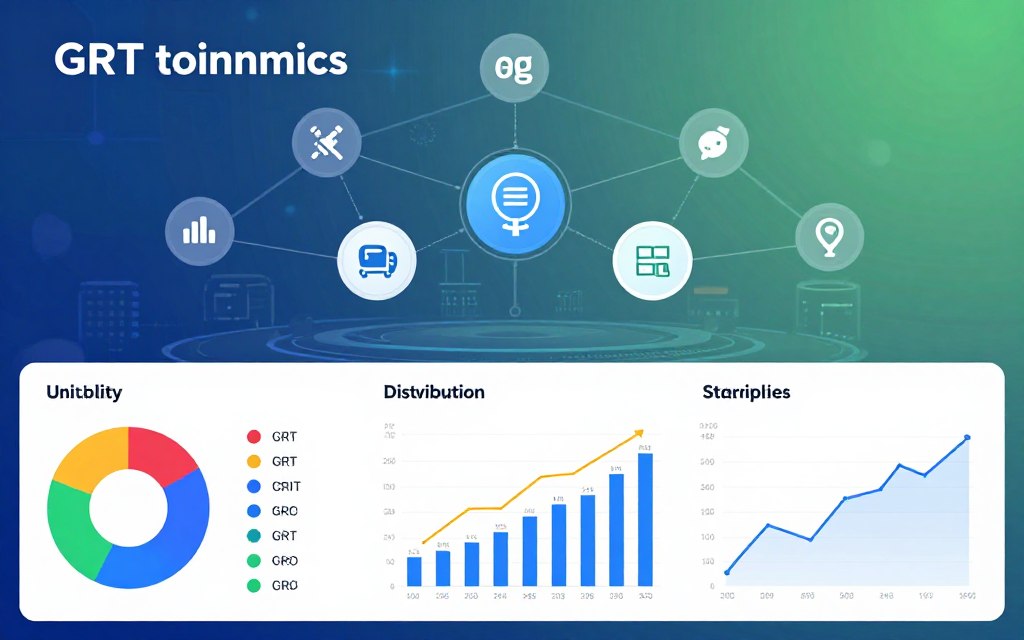
The Graph token has a total supply of 10.6 billion GRT. New tokens are given out as rewards to Indexers and Delegators at a rate of about 3% a year. This encourages people to help the network.
On the other hand, some query fees are burned, which helps control inflation. This burn rate aims to balance out the inflation over time. The Graph Foundation manages this balance and oversees the protocol.
Acquiring and Securing GRT Tokens
GRT is available on many trading platforms, both centralised and decentralised. It’s important to keep your tokens safe after buying them.
Available Exchanges and Recommended Wallet Practices
Big centralised exchanges like Coinbase and Binance offer GRT trading. For a safer option, use decentralised exchanges (DEXs) on Ethereum or other chains for direct swaps.
After buying, it’s best to move GRT to a self-custody wallet for security. Good choices include:
- Hardware wallets (e.g., Ledger, Trezor) for long-term storage.
- Reputable software wallets (e.g., MetaMask) for active use.
Always keep your private keys or seed phrase safe. Losing them means you’ll lose access to your tokens forever.
Active and Passive Participation Models
The Graph network offers different ways to get involved, from hands-on roles to more passive support. Each option has its own needs and risks.
Staking, Delegating, and the Associated Rewards and Risks
Being active means running network infrastructure. Indexers need a lot of technical know-how and a big GRT stake to secure work. Curators help by pointing to high-quality data subgraphs.
For most, being passive through delegation is easier. Delegators stake their GRT with an Indexer and share in their rewards without running a node. This helps the network and earns them income.
But, all staking comes with risks. Indexers can be penalised, which affects their delegators. Delegators should also think about the lock-up periods and the reliability of their chosen Indexer.
| Participation Model | Role | Technical Requirement | Primary Risk |
|---|---|---|---|
| Active | Indexer/Curator | High | Slashing, operational cost |
| Passive | Delegator | Low | Indexer performance, lock-up |
It’s important to think about your technical skills and how much risk you’re willing to take before investing in GRT. Understanding GRT tokenomics is key to a successful strategy.
The Indispensable Data Layer for a Decentralised Future
The Graph protocol is not just a speculative asset. It’s a key part of Web3 infrastructure. It solves a big problem: making blockchain data easy to access and reliable. It does this by indexing and organising global on-chain information through subgraphs.
This utility powers many sectors. DeFi platforms, NFT marketplaces, and advanced dApps rely on The Graph’s network. It supports the growth of autonomous AI agents that work with blockchains. The protocol’s value grows as the ecosystem scales.
The digital asset space is evolving fast. The mix of AI and crypto offers big growth chances. Research, like VanEck’s on crypto AI revenue predictions, shows the need for verifiable data. The Graph’s decentralised indexing meets this need perfectly.
In the end, The Graph (GRT) is a vital part of the Web3 infrastructure stack. Its success is seen in its adoption and making blockchain data usable. For the decentralised internet to reach its full promise, protocols like The Graph are not just helpful. They are essential.
FAQ
What is the fundamental problem The Graph protocol solves?
The Graph makes it easier to access blockchain data. Before it, getting data was slow and expensive. Now, developers can use The Graph to get data quickly and easily.
What exactly is a Subgraph?
A Subgraph is a special data index in The Graph network. It helps organise data from smart contracts or blockchain events. This makes complex data easy to use.
Is The Graph (GRT) an artificial intelligence project?
No, The Graph is not about artificial intelligence. It’s a smart data layer. It makes blockchain data useful for AI and analytics.
What is the utility of the GRT token?
The GRT token powers The Graph’s network. It’s used for staking, signalling, delegating, and paying query fees. It’s the network’s economic fuel.
Who are the key participants in The Graph network?
The network has four main roles. Indexers index data and serve queries. Curators signal on valuable Subgraphs. Delegators share rewards without running a node. Consumers use the data for their apps.
How does a query actually work on The Graph?
When a dApp needs data, it sends a GraphQL query. The query is routed and an Indexer is chosen. The Indexer returns the data, and a micro-payment is made automatically.
What are some major projects that use The Graph?
DeFi protocols like Uniswap and NFT marketplaces like OpenSea use The Graph. It’s also key for DAOs and gaming dApps. It’s a vital part of Web3.
What are the main advantages over a centralised API?
The Graph is more reliable and transparent. It’s decentralised, so there’s no single point of failure. It also saves developers time and money.
What challenges does The Graph protocol face?
The Graph faces technical challenges and concerns about centralisation. It also competes with other indexing services. These are big hurdles.
What is The Graph’s multi-chain strategy?
The Graph supports many blockchains. It’s key for a multi-chain future. It already works with Ethereum and Polygon, and is expanding to more.
How can I participate in The Graph network?
You can be an Indexer or a Curator. Or, you can delegate your GRT to an Indexer. But, be aware of the risks involved.

 By
By

 By
By