
The project, once known as Fetch.ai, has now changed its name to the Artificial Superintelligence Alliance. It aims to build a network for autonomous economic agents. This is a big step in combining artificial intelligence with blockchain.
Our live data shows the FET token’s current market status. It’s trading at $0.21 USD with a total market cap of $469 million. It ranks 84th by market cap in the digital asset world.
This analysis dives deep into the project’s future. We’ll look at its tokenomics, past performance, and what drives its value.
That broader market context also helps when evaluating photon ai crypto a look, especially where AI, automation, and speculation start to overlap.
Next, we’ll give a detailed price forecast for both short and long-term. Our aim is to help investors understand this asset’s path in two fast-changing fields.
1. Understanding Fetch.ai and the FET Token
Imagine a digital marketplace where smart software can find services, negotiate, and trade on its own. This is what Fetch.ai is creating. To understand the FET token’s future, we need to look at the project’s key ideas. This section explains its big vision and the technology that makes it possible.
1.1. The Vision of a Decentralised Machine Learning Network
Fetch.ai wants to build a network for artificial intelligence and machine learning that’s open and free. It aims to fix a big problem in today’s digital world: data, algorithms, and computing power are often not connected well. Valuable data is often stuck in one place, and AI models can’t easily get the resources they need.
The project dreams of a global, decentralised machine learning marketplace. Here, anyone can offer or use AI services without needing middlemen. A researcher could work directly with a company that has the data they need. A logistics company could use real-time models to improve its fleet’s performance. This way, AI can be more accessible, leading to more automation and value creation.
The table below shows how this new model is different from the old way of doing things.
| Traditional Model | Fetch.ai Model |
|---|---|
| Centralised Intermediation: Platforms like app stores or cloud service hubs act as gatekeepers, taking fees and setting rules. | Peer-to-Peer Network: Direct interactions between service providers and users, facilitated by the blockchain. |
| Restricted Access: High barriers to entry for smaller players; data and tools are often locked within large corporations. | Open Access: A permissionless environment where any agent, large or small, can participate and offer value. |
| Manual Coordination: Finding the right service, negotiating terms, and executing agreements requires significant human effort. | Automated Discovery & Negotiation: Intelligent software handles search, deal-making, and execution autonomously. |
| Inefficient Resource Utilisation: Idle computing power or unused data sets cannot easily be monetised or leveraged by others. | Optimised Resource Use: The network efficiently matches supply with demand, turning underutilised assets into active economic participants. |
1.2. Core Technology: Autonomous Economic Agents (AEAs)
The heart of Fetch.ai’s vision is its Autonomous Economic Agents (AEAs). Imagine an AEA as a digital agent with a goal. It’s not just a chatbot or script. It’s a smart software entity that can see its surroundings, make choices, and act to achieve its goal.
These agents run on the Fetch.ai blockchain. They can do complex tasks like finding data, negotiating prices, or executing smart contracts all by themselves. For example, an AEA could manage a user’s energy use. It might always look for the cheapest electricity and switch suppliers to save money.
The strength of autonomous economic agents is in automating complex economic tasks. By using these digital agents, businesses and people can be more efficient. This creates a system where machines can exchange value easily, forming the core of the AI economy that Fetch.ai wants to build.
2. FET Tokenomics and Network Utility
Fetch.ai’s success is built on a well-designed token economy with FET at its core. Understanding its tokenomics is key to seeing its future and value. This part explains how FET works and why it’s vital for the AI marketplace.
2.1. Supply Metrics: Circulation, Max Supply and Inflation
FET’s supply is carefully managed to grow the network while keeping its value. There are about 2.31 billion FET in circulation, which affects its market value.
FET has a set maximum supply, preventing inflation. New tokens come from staking rewards, which rewards users and controls inflation.
This approach rewards early users and keeps the token scarce. This scarcity can help the price as more people use it.
2.2. Primary Use Cases: Fuel for the AI Economy
FET’s real value comes from its many uses in Fetch.ai. It’s essential for transactions, security, and making decisions.
2.2.1. Network Fees and Agent Operations
Fetch.ai’s network needs resources for every action. Autonomous Economic Agents (AEAs) pay with FET for services like data exchange. This demand keeps the token’s value steady.
FET is needed for tasks like shipping routes or data sales. Its value is tied to how much the platform is used.
2.2.2. Staking for Network Security and Rewards
Staking is key for the network’s security and agreement. By locking FET, users help validate transactions and protect against threats. They earn FET staking rewards from the network’s inflation.
Staking offers a passive income and reduces market tokens. It’s a smart move for investors looking to grow their FET.
2.2.3. Governance and Voting Rights
FET is more than a utility token; it’s a way to shape the project’s future. Holders can vote on important decisions like updates and funding. These choices affect the protocol’s direction.
This system keeps the ecosystem decentralised and community-focused. Holding FET lets users influence the AI economy’s growth.
3. Historical Performance of FET Cryptocurrency
The FET cryptocurrency has seen ups and downs, like many new digital assets. A detailed FET crypto analysis is key to grasp its value and future. It looks at its start, the big jump in 2021, and the drops that followed.
Recently, FET’s price has been quite volatile. In the last 24 hours, it dropped by $0.0030. Over seven days, it fell by nearly 5.91%. The biggest drop was 25.77% in the last month. This shows the big price swings FET has faced.
3.1. Launch and Early Market Cycles
Fetch.ai launched FET on Binance Launchpad in March 2019. It started at about $0.05. The early days were full of ups and downs as the project grew.
In 2020, the price bounced between $0.10 and $0.30. This was a key time for building the tech, like the Autonomous Economic Agents (AEA) framework. The market was influenced by the project’s progress and wider crypto trends, not just AI hype.
3.2. The 2021 Bull Run and Subsequent Correction
The 2021 bull market made FET soar. Interest in AI and machine learning was high. FET, focused on AI and blockchain, was a big winner.
Starting at $0.40 in early 2021, FET hit an all-time high near $1.20 by September. This was a 200% gain in less than a year. The rise was part of a trend where AI and the metaverse excited the market.
But then, the market cooled down in 2022. FET’s price fell back to around $0.30. This erased most of its gains. It shows FET’s price can swing a lot, up or down.
The table below shows key moments in FET’s price history. It helps with your FET crypto analysis.
| Year | Event | Approximate Price (USD) | Analysis Notes |
|---|---|---|---|
| 2019 | Token Sale & Launch | $0.05 | Initial listing on major exchanges following Binance IEO. |
| 2020 | Early Trading Phase | $0.10 – $0.30 | High volatility as network development continued. |
| 2021 Q1-Q3 | Bull Run Peak | $0.40 – $1.20 | Driven by AI narrative and broader crypto market euphoria. |
| 2022 | Market Correction | $0.25 – $0.35 | Sharp decline aligned with the onset of the crypto winter. |
| 2023 | Recovery Phase | $0.40 – $0.60 | Stabilisation and growth tied to ecosystem updates. |
| 2024 YTD | Recent Bearish Pressure | ~$0.25 | Facing monthly declines exceeding 25%, highlighting ongoing volatility. |
This history is key. It shows FET can grow fast in good times but also drop sharply. The recent 25% monthly drop is a clear example. Any good FET crypto analysis must consider this history and the project’s tech progress.
4. Fetch.ai’s Current Market Position and Developments
Looking at Fetch.ai’s current state means diving into its partnerships and tech roadmap. The project’s health and future value depend on its partnerships and tech progress. This section looks at the key factors for growth and tech advancements.
4.1. Key Partnerships and Ecosystem Growth
Fetch.ai has made strategic partnerships to use its tech in real-world sectors. These partnerships are key for AEAs adoption and FET token demand.
A big partnership is with Bosch. They’re working on Web3 solutions for industries and smart cities. This partnership boosts Fetch.ai’s credibility and helps solve big problems.
Fetch.ai also works with Datarella on privacy data exchange solutions. A partnership with IOTA/Tangle ecosystem aims to create new mobility and energy markets. These partnerships show Fetch.ai’s aim to go beyond crypto.
“Our partnerships are not just announcements; they are operational frameworks to deploy AEAs at scale. Each collaboration is a step towards a functioning, multi-stakeholder AI economy,” said a Fetch.ai spokesperson.
The table below shows some of Fetch.ai’s key partnerships and their focus areas:
| Partner | Type of Collaboration | Primary Focus Area | Potential Ecosystem Impact |
|---|---|---|---|
| Bosch | Strategic Technology Alliance | Industrial IoT, Smart Cities | High-credibility, large-scale use case deployment |
| Datarella | Technology Integration | Secure Data Markets & AI | Enhances data utility and privacy features for AEAs |
| IOTA/Tangle Ecosystem | Joint Mobility Initiative | Decentralised Mobility & Energy | Expands into adjacent Web3 sectors and user bases |
| Various DeFi Protocols | Liquidity & Staking Integrations | Decentralised Finance (DeFi) | Increases FET utility and on-chain liquidity options |
This approach to growth boosts the project’s momentum. It affects market perception and token price. For more on this, see this market analysis.
4.2. Recent Technical Upgrades and Roadmap Progress
Fetch.ai has improved its core network’s strength and ability. A big step was upgrading its mainnet to a Cosmos SDK-based chain. This made transactions faster, improved interoperability, and enhanced security.
Improving the Autonomous Economic Agents (AEA) framework is a top priority. Recent updates make it easier for developers to build and monetise agents. Better communication between agents and support for off-chain data are key improvements.

The project shares its development roadmap publicly. Progress is mostly in line with its goals. Ongoing work includes scaling the network, improving the agent marketplace, and developing collective learning.
Staying on track with its Fetch.ai roadmap is essential. It shows the community and users that the infrastructure is evolving. This supports Fetch.ai’s vision of a decentralised machine learning network.
5. Fundamental Factors Influencing FET’s Value
The value of Fetch.ai’s FET token is shaped by many factors. These include technology, market trends, and laws. A deep look into these areas is key for any AI blockchain investment.
5.1. Adoption of AI and Machine Learning Technologies
The demand for Fetch.ai comes from the global push for AI and machine learning. Businesses want to automate and use data better. This is where Fetch.ai’s AI solutions can help.
Fetch.ai’s special feature is its Autonomous Economic Agents (AEAs). If more businesses use these agents, it will boost FET’s value. The token powers these agents to work and trade on the network.
Success for Fetch.ai depends on real-world use, not just crypto trends. Watching the growth of AEAs and partnerships is important.
5.2. Broader Cryptocurrency Market Sentiment
FET is a cryptocurrency, so its price is affected by the market. In good times, all crypto projects can do well. But in bad times, even strong projects can fall.
The Crypto Fear and Greed Index shows how the market feels. A low score means fear, which can lead to a market bottom. Recently, the index was at 24, showing extreme fear.
Negative feelings in the market can hurt FET, even if it’s a good project. It’s important to look beyond the price during these times.
5.3. Regulatory Landscape for AI and Crypto Assets
Fetch.ai is caught between two big areas: crypto and AI. This means it faces two kinds of rules, which investors need to watch.
Crypto rules vary by place. Tighter rules in big places like the US or EU can affect how easy it is to trade.
AI rules are also changing fast. Laws about data and AI control could change how Fetch.ai works. Good rules for AI could help FET a lot.
5.4. Competition Within the AI-Blockchain Niche
Fetch.ai is not alone in combining AI and blockchain. The field is growing, with different ideas. Knowing this helps see how FET might do in the market.
Other big names include SingularityNET and Ocean Protocol. They focus on AI algorithms and data exchange. Fetch.ai stands out with its agents that can handle complex tasks.
The table below compares major players in this field:
| Project | Primary Focus | Native Token | Key Differentiator |
|---|---|---|---|
| Fetch.ai | Autonomous Economic Agents (AEAs) | FET | Agent-based automation for complex multi-party tasks. |
| SingularityNET | AI Algorithm Marketplace | AGIX | Platform to create, share, and monetise AI services. |
| Ocean Protocol | Data Exchange & Monetisation | OCEAN | Tools for publishing, discovering, and consuming data sets. |
This competition pushes for new ideas but also splits attention and money. Fetch.ai needs to show its unique value to succeed.
6. Short-Term FET AI Crypto Price Prediction (2024-2025)
The future of FET’s price depends on technical patterns and developments in the Artificial Superintelligence Alliance. This is a key time for investors to spot entry and exit points before trends become clear.
We’ll look at the current market structure and three scenarios for 2025. This gives a balanced view of the near-term opportunities and risks.
6.1. Analysis of Current Price Action and Support/Resistance Levels
Recent analysis shows caution for FET. The token’s position on charts suggests bearish momentum. This means the market might be consolidating or correcting.
Identifying where buying interest might start is critical. Traders watch for former price peaks and lows as resistance and support.
A drop below major support could mean further falls. But, breaking above resistance could signal a trend change.
6.2. Scenario-Based Outlook for the Coming Year
Crypto assets are volatile, so a single price target is less useful. We present three scenarios for FET’s 2025 performance, based on different assumptions.
6.2.1. Bullish Scenario and Price Targets
The bullish scenario needs a perfect mix of positive factors. This includes a market recovery, Fetch.ai’s services adoption by big companies, and technical progress.
In this scenario, FET could see a big increase. Some models predict a peak near $0.758 in 2025. This would show strong confidence in the network’s usefulness.
Key factors include revenue from Autonomous Economic Agents (AEAs) and more staking activity.
6.2.2. Bearish Scenario and Downside Risks
The bearish scenario is caused by negative market sentiment, delays, or AI-crypto regulation. This could lead to more selling.
Analyses suggest a possible low of $0.2128. A drop to this level would test long-term holders’ resolve. Risks include failing to secure partnerships and a “risk-off” digital asset environment.
Liquidity might become a problem if trading volumes drop during a bear phase.
6.2.3. Base Case Forecast
The base case forecast is based on moderate growth without major breakthroughs. It’s a cautious view.
Many predict an average price for FET in 2025 around $0.2352. The neutral scenario suggests a value near €0.1752 by year’s end.
This forecast shows cautious optimism. It values the project’s strong fundamentals while considering market uncertainty and competition.
| Scenario | Key Condition | 2025 Price Target Range | Average Projection |
|---|---|---|---|
| Bullish | Market recovery & high adoption | $0.598 – $0.758 | ~$0.689 |
| Bearish | Continued downturn & delays | ~$0.2128 – Lower | N/A |
| Base Case | Moderate, steady growth | $0.2128 – $0.2419 | $0.2352 |
In summary, FET’s path in 2025 will be volatile. Investors should watch the token’s technical levels and Fetch.ai’s progress.
7. Mid to Long-Term FET Price Forecast and Targets
Looking ahead, a Fetch.ai price forecast for the next decade must focus on the project’s growth. This goes beyond just looking at charts. It’s about how the network’s adoption could increase the value of FET over five years.
7.1. Modelling Adoption and Network Value
Forecasting FET’s value in 2026 or 2030 is more about its economic use than chart patterns. Analysts use several methods:
- Network Value-to-Transaction (NVT) Modelling: This compares the network’s total market capitalisation to transaction values. Growth in commerce supports a higher valuation.
- Discounted Cash Flow (DCF) for Staking Rewards: Future staking yields are projected and discounted to present value. This model is based on future income.
- Metcalfe’s Law Adaptations: This principle says a network’s value grows with the square of its users. For Fetch.ai, active agents and developers are key.
The idea is simple: more businesses and developers using Fetch.ai will increase demand for FET. This creates a cycle where utility boosts token value.
7.2. Possible Price Ranges for 2026-2030
Combining data from various firms gives a clear view of long-term price ranges. The table below shows Fetch.ai price forecast figures from different models.
| Year | Source 1 (Avg. Prediction) | Source 2 (Long-Term Model) | Source 3 (Scenario-Based) |
|---|---|---|---|
| 2026 | $0.3622 | ~$0.52 (€0.4758) | N/A |
| 2030 | $1.71 | N/A | $4.67 (Avg); $8.38 (High) |
The forecasts show a lot of growth, but with a wide range due to different assumptions. By 2026, prices are expected to be between $0.36 and $0.52. By 2030, the range is even wider.
Conservative models suggest an average price near $1.71 by 2030. But, more optimistic models see prices reaching $4.67 or even $8.38.
This wide range shows the uncertainty in crypto forecasting. The actual price will depend on Fetch.ai’s success, adoption, and the economy. Yet, all models show a strong growth story for FET’s Fetch.ai price forecast.
8. Possible Risks and Investment Challenges
The journey to achieve Fetch.ai’s big goals is full of technical, market, and regulatory obstacles. These could affect FET’s value. Investors need to weigh the project’s future against the risk of setbacks. This careful planning helps avoid surprises.
8.1. Technology and Execution Risk
Fetch.ai aims to create a complex system for machine learning and autonomous agents. The technology risk is high. Building, securing, and growing such a platform is a big challenge.
Execution risk is also a big issue. The team must keep innovating to stay ahead. They also need to convince developers and businesses to use their new technology. Any problem could hurt confidence and slow growth.
8.2. Market Volatility and Liquidity Concerns
FET, like many altcoins, faces market volatility. Its price can change a lot, often not based on the project’s real value. Recent changes show how unstable it can be.
In the last week, FET’s price dropped by almost 5.91%. Over the last month, it fell by 25.77%. These big changes can test an investor’s patience.
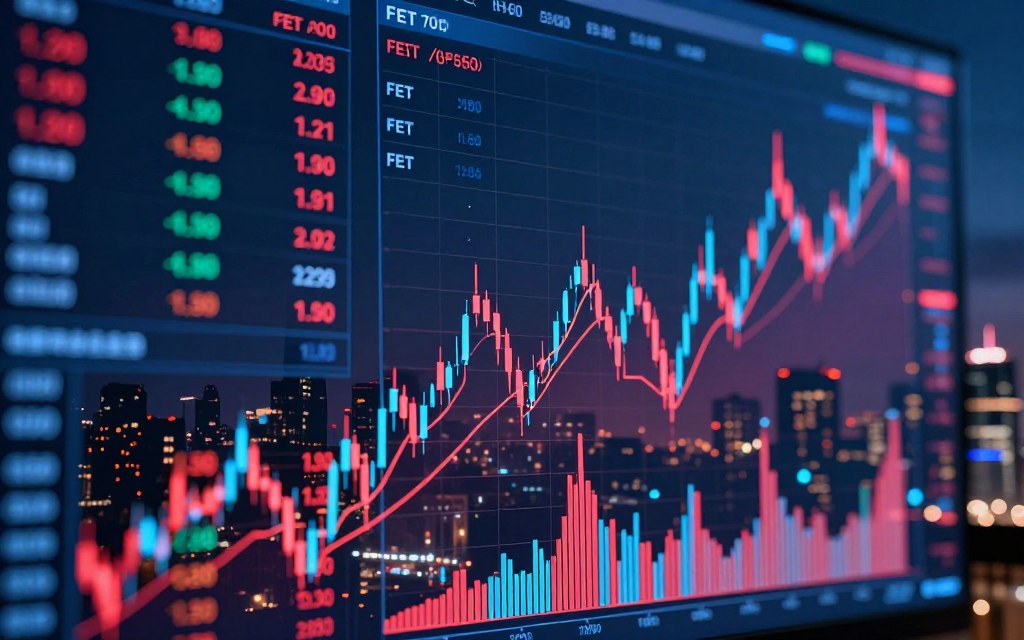
Volatility also raises liquidity concerns. FET is listed on big exchanges, but its trading volume is smaller than top assets. This can cause big price swings and make it hard to buy or sell without losing a lot.
Analysts tracking these FET price struggles say how fast opinions can change in the AI crypto world.
8.3. Regulatory and Macroeconomic Headwinds
Fetch.ai is at the centre of two hot topics: cryptocurrency and artificial intelligence. This makes it face regulatory headwinds. Governments are making rules for digital assets and AI, which could affect Fetch.ai.
Future laws could limit how Fetch.ai uses data, controls agents, or functions. The project’s success depends on a good regulatory environment.
Also, macroeconomic conditions can be a problem. High interest rates, inflation, and downturns often make people less willing to invest in risky assets like cryptocurrencies. FET’s price could drop a lot if the market goes down, even if the technology is good.
Investing in new technology is a bet on an uncertain future. The best rewards often come from areas where risks are clear.
Knowing about these FET investment risks doesn’t mean you should avoid investing. It’s about understanding the risks and managing them well. A smart investment strategy balances risk and reward, including for high-risk, high-reward assets like FET.
9. A Practical Guide to Acquiring and Securing FET
This section guides you on how to buy FET tokens and keep them safe. Knowing the practical steps is as important as understanding the market.
9.1. Recommended Cryptocurrency Exchanges for FET
FET is available on many trading platforms. These are centralised (CEX) and decentralised (DEX) exchanges. Your choice depends on what you value most, like ease of use or fees.
Centralised exchanges (CEXs) like Binance and Coinbase are good for beginners. They offer easy fiat on-ramps and are user-friendly. You trade with the exchange itself.
Decentralised exchanges (DEXs) such as Uniswap offer peer-to-peer trading. You use a software wallet like MetaMask and keep your funds safe. This method is more secure but can be harder to learn.
| Platform Type | Examples | Best For | Key Consideration |
|---|---|---|---|
| Centralised Exchange (CEX) | Binance, Coinbase, Kraken | Beginners, fast fiat purchases | You trust the platform with your funds temporarily |
| Decentralised Exchange (DEX) | Uniswap, Fetch.ai Web App | Users prioritising self-custody | You are responsible for your private keys and wallet security |
| Native Staking Portal | Fetch.ai Wallet / Dashboard | Existing holders seeking rewards | Typically requires FET already in a compatible wallet |
9.2. Step-by-Step Purchase Process
For new investors, using a reputable centralised exchange is easiest. Here’s how to do it.
- Choose and Register: Pick an exchange and create an account. Complete the KYC verification with a government ID.
- Secure Your Account: Enable two-factor authentication (2FA) right away. This adds extra security.
- Deposit Funds: Go to the deposit section. You can fund your account with fiat or another cryptocurrency.
- Place Your Order: Find the FET trading pair. You can place a market order or a limit order.
- Withdraw to Your Wallet: Do not leave your tokens on the exchange. Withdraw your FET to a private wallet for long-term holding.
9.3. Best Practices for Storing FET Securely
Remember, you are your own bank with cryptocurrency. Exchanges are for trading, and wallets are for keeping your assets safe. Losing your private keys or seed phrase means losing your funds forever.
9.3.1. Hardware Wallets (Cold Storage)
A hardware wallet is the best way to keep FET safe. These devices store your private keys offline, making them safe from hackers. This is called cold storage.
Popular brands include Ledger and Trezor. You connect them to your computer to authorise transactions. But the keys stay on the device. It’s the top choice for any big investment in FET or other digital assets.
9.3.2. Software Wallets and Staking Options
Software wallets are apps on your phone or computer. They’re good for small amounts or active use. But they’re connected to the internet, making them riskier than hardware wallets.
Options include MetaMask and the official Fetch.ai Wallet. A big plus is the integrated staking functionality. You can delegate your FET tokens to network validators to earn rewards. This helps secure the network while you earn a return.
Always back up your secret recovery seed phrase on paper and keep it safe. Never share it with anyone.
10. Conclusion
Fetch.ai stands out with its aim for a decentralised machine learning network. The FET token is key, letting Autonomous Economic Agents work and add value.
This look into FET tokenomics, key drivers, and market standing shows both chances and big ups and downs. The future of FET depends on AI use, partnerships, and the health of the crypto market.
While there’s a big chance for growth, there are also big risks. Hurdles in tech, changes in laws, and competition from other AI-blockchain projects like Ocean Protocol and SingularityNET are challenges. All price forecasts are just guesses.
Investing in Fetch.ai needs careful thought. Look into the project’s plans, the FET token’s use, and your own financial plan. The world of AI and blockchain is changing fast, so be careful and do your homework.
FAQ
What is the Artificial Superintelligence Alliance?
The Artificial Superintelligence Alliance is a new name. It comes from the merge of Fetch.ai, SingularityNET, and Ocean Protocol. This alliance wants to create a new way of doing AI, different from what big tech companies are doing. They use blockchain and AI together.
What are Autonomous Economic Agents (AEAs) on Fetch.ai?
Autonomous Economic Agents (AEAs) are at the heart of Fetch.ai. They are smart software that can do tasks and make decisions on their own. They act like digital helpers, doing complex jobs without needing a person to tell them what to do.
What is the total and circulating supply of FET tokens?
FET tokens have a total of 2.63 billion. Right now, about 2.31 billion are in circulation. Knowing these numbers helps understand how rare the tokens are and how they might change over time.
What is the FET token used for?
FET tokens are key for the Fetch.ai network. They are used to pay for services, help secure the network, and vote on the network’s future. They are essential for the network’s smooth operation.
How has the FET token performed historically?
FET has seen a lot of ups and downs, like many cryptocurrencies. It went up a lot in 2021 because of excitement about AI and crypto. Then, it dropped a lot. Recently, it has fallen even more, showing how sensitive it is to market feelings.
Who are Fetch.ai’s main competitors?
Fetch.ai is up against other blockchain-AI projects. Its main rivals are SingularityNET and Ocean Protocol, its partners. It also faces competition from big companies like Google and OpenAI in the AI field.
What is the short-term price prediction for FET in 2025?
Predictions for FET in 2025 vary a lot. Some say it could be around
FAQ
What is the Artificial Superintelligence Alliance?
The Artificial Superintelligence Alliance is a new name. It comes from the merge of Fetch.ai, SingularityNET, and Ocean Protocol. This alliance wants to create a new way of doing AI, different from what big tech companies are doing. They use blockchain and AI together.
What are Autonomous Economic Agents (AEAs) on Fetch.ai?
Autonomous Economic Agents (AEAs) are at the heart of Fetch.ai. They are smart software that can do tasks and make decisions on their own. They act like digital helpers, doing complex jobs without needing a person to tell them what to do.
What is the total and circulating supply of FET tokens?
FET tokens have a total of 2.63 billion. Right now, about 2.31 billion are in circulation. Knowing these numbers helps understand how rare the tokens are and how they might change over time.
What is the FET token used for?
FET tokens are key for the Fetch.ai network. They are used to pay for services, help secure the network, and vote on the network’s future. They are essential for the network’s smooth operation.
How has the FET token performed historically?
FET has seen a lot of ups and downs, like many cryptocurrencies. It went up a lot in 2021 because of excitement about AI and crypto. Then, it dropped a lot. Recently, it has fallen even more, showing how sensitive it is to market feelings.
Who are Fetch.ai’s main competitors?
Fetch.ai is up against other blockchain-AI projects. Its main rivals are SingularityNET and Ocean Protocol, its partners. It also faces competition from big companies like Google and OpenAI in the AI field.
What is the short-term price prediction for FET in 2025?
Predictions for FET in 2025 vary a lot. Some say it could be around $0.2352 on average. But, prices could drop to $0.21 if things get worse, or go up to $0.75 if AI and crypto get more popular.
What is the long-term price forecast for FET by 2030?
Looking ahead to 2030, forecasts are very uncertain but hopeful. They suggest FET could be worth between $1.71 and $4.67. This depends on how well the network grows and if more people start using it.
What are the main risks of investing in FET?
Investing in FET comes with big risks. There’s a chance the technology won’t work as planned. The market can be very unpredictable, with prices changing a lot. There’s also uncertainty about new rules and competition from other tech companies.
Where can I buy FET tokens and how should I store them?
You can buy FET on big exchanges like Binance, Coinbase, and Kraken. It’s also on some DEXs. For safety, move your tokens to a personal wallet. Use a hardware wallet for big amounts. Software wallets are okay for smaller amounts or staking.
.2352 on average. But, prices could drop to
FAQ
What is the Artificial Superintelligence Alliance?
The Artificial Superintelligence Alliance is a new name. It comes from the merge of Fetch.ai, SingularityNET, and Ocean Protocol. This alliance wants to create a new way of doing AI, different from what big tech companies are doing. They use blockchain and AI together.
What are Autonomous Economic Agents (AEAs) on Fetch.ai?
Autonomous Economic Agents (AEAs) are at the heart of Fetch.ai. They are smart software that can do tasks and make decisions on their own. They act like digital helpers, doing complex jobs without needing a person to tell them what to do.
What is the total and circulating supply of FET tokens?
FET tokens have a total of 2.63 billion. Right now, about 2.31 billion are in circulation. Knowing these numbers helps understand how rare the tokens are and how they might change over time.
What is the FET token used for?
FET tokens are key for the Fetch.ai network. They are used to pay for services, help secure the network, and vote on the network’s future. They are essential for the network’s smooth operation.
How has the FET token performed historically?
FET has seen a lot of ups and downs, like many cryptocurrencies. It went up a lot in 2021 because of excitement about AI and crypto. Then, it dropped a lot. Recently, it has fallen even more, showing how sensitive it is to market feelings.
Who are Fetch.ai’s main competitors?
Fetch.ai is up against other blockchain-AI projects. Its main rivals are SingularityNET and Ocean Protocol, its partners. It also faces competition from big companies like Google and OpenAI in the AI field.
What is the short-term price prediction for FET in 2025?
Predictions for FET in 2025 vary a lot. Some say it could be around $0.2352 on average. But, prices could drop to $0.21 if things get worse, or go up to $0.75 if AI and crypto get more popular.
What is the long-term price forecast for FET by 2030?
Looking ahead to 2030, forecasts are very uncertain but hopeful. They suggest FET could be worth between $1.71 and $4.67. This depends on how well the network grows and if more people start using it.
What are the main risks of investing in FET?
Investing in FET comes with big risks. There’s a chance the technology won’t work as planned. The market can be very unpredictable, with prices changing a lot. There’s also uncertainty about new rules and competition from other tech companies.
Where can I buy FET tokens and how should I store them?
You can buy FET on big exchanges like Binance, Coinbase, and Kraken. It’s also on some DEXs. For safety, move your tokens to a personal wallet. Use a hardware wallet for big amounts. Software wallets are okay for smaller amounts or staking.
.21 if things get worse, or go up to
FAQ
What is the Artificial Superintelligence Alliance?
The Artificial Superintelligence Alliance is a new name. It comes from the merge of Fetch.ai, SingularityNET, and Ocean Protocol. This alliance wants to create a new way of doing AI, different from what big tech companies are doing. They use blockchain and AI together.
What are Autonomous Economic Agents (AEAs) on Fetch.ai?
Autonomous Economic Agents (AEAs) are at the heart of Fetch.ai. They are smart software that can do tasks and make decisions on their own. They act like digital helpers, doing complex jobs without needing a person to tell them what to do.
What is the total and circulating supply of FET tokens?
FET tokens have a total of 2.63 billion. Right now, about 2.31 billion are in circulation. Knowing these numbers helps understand how rare the tokens are and how they might change over time.
What is the FET token used for?
FET tokens are key for the Fetch.ai network. They are used to pay for services, help secure the network, and vote on the network’s future. They are essential for the network’s smooth operation.
How has the FET token performed historically?
FET has seen a lot of ups and downs, like many cryptocurrencies. It went up a lot in 2021 because of excitement about AI and crypto. Then, it dropped a lot. Recently, it has fallen even more, showing how sensitive it is to market feelings.
Who are Fetch.ai’s main competitors?
Fetch.ai is up against other blockchain-AI projects. Its main rivals are SingularityNET and Ocean Protocol, its partners. It also faces competition from big companies like Google and OpenAI in the AI field.
What is the short-term price prediction for FET in 2025?
Predictions for FET in 2025 vary a lot. Some say it could be around $0.2352 on average. But, prices could drop to $0.21 if things get worse, or go up to $0.75 if AI and crypto get more popular.
What is the long-term price forecast for FET by 2030?
Looking ahead to 2030, forecasts are very uncertain but hopeful. They suggest FET could be worth between $1.71 and $4.67. This depends on how well the network grows and if more people start using it.
What are the main risks of investing in FET?
Investing in FET comes with big risks. There’s a chance the technology won’t work as planned. The market can be very unpredictable, with prices changing a lot. There’s also uncertainty about new rules and competition from other tech companies.
Where can I buy FET tokens and how should I store them?
You can buy FET on big exchanges like Binance, Coinbase, and Kraken. It’s also on some DEXs. For safety, move your tokens to a personal wallet. Use a hardware wallet for big amounts. Software wallets are okay for smaller amounts or staking.
.75 if AI and crypto get more popular.
What is the long-term price forecast for FET by 2030?
Looking ahead to 2030, forecasts are very uncertain but hopeful. They suggest FET could be worth between
FAQ
What is the Artificial Superintelligence Alliance?
The Artificial Superintelligence Alliance is a new name. It comes from the merge of Fetch.ai, SingularityNET, and Ocean Protocol. This alliance wants to create a new way of doing AI, different from what big tech companies are doing. They use blockchain and AI together.
What are Autonomous Economic Agents (AEAs) on Fetch.ai?
Autonomous Economic Agents (AEAs) are at the heart of Fetch.ai. They are smart software that can do tasks and make decisions on their own. They act like digital helpers, doing complex jobs without needing a person to tell them what to do.
What is the total and circulating supply of FET tokens?
FET tokens have a total of 2.63 billion. Right now, about 2.31 billion are in circulation. Knowing these numbers helps understand how rare the tokens are and how they might change over time.
What is the FET token used for?
FET tokens are key for the Fetch.ai network. They are used to pay for services, help secure the network, and vote on the network’s future. They are essential for the network’s smooth operation.
How has the FET token performed historically?
FET has seen a lot of ups and downs, like many cryptocurrencies. It went up a lot in 2021 because of excitement about AI and crypto. Then, it dropped a lot. Recently, it has fallen even more, showing how sensitive it is to market feelings.
Who are Fetch.ai’s main competitors?
Fetch.ai is up against other blockchain-AI projects. Its main rivals are SingularityNET and Ocean Protocol, its partners. It also faces competition from big companies like Google and OpenAI in the AI field.
What is the short-term price prediction for FET in 2025?
Predictions for FET in 2025 vary a lot. Some say it could be around $0.2352 on average. But, prices could drop to $0.21 if things get worse, or go up to $0.75 if AI and crypto get more popular.
What is the long-term price forecast for FET by 2030?
Looking ahead to 2030, forecasts are very uncertain but hopeful. They suggest FET could be worth between $1.71 and $4.67. This depends on how well the network grows and if more people start using it.
What are the main risks of investing in FET?
Investing in FET comes with big risks. There’s a chance the technology won’t work as planned. The market can be very unpredictable, with prices changing a lot. There’s also uncertainty about new rules and competition from other tech companies.
Where can I buy FET tokens and how should I store them?
You can buy FET on big exchanges like Binance, Coinbase, and Kraken. It’s also on some DEXs. For safety, move your tokens to a personal wallet. Use a hardware wallet for big amounts. Software wallets are okay for smaller amounts or staking.
.71 and .67. This depends on how well the network grows and if more people start using it.
What are the main risks of investing in FET?
Investing in FET comes with big risks. There’s a chance the technology won’t work as planned. The market can be very unpredictable, with prices changing a lot. There’s also uncertainty about new rules and competition from other tech companies.
Where can I buy FET tokens and how should I store them?
You can buy FET on big exchanges like Binance, Coinbase, and Kraken. It’s also on some DEXs. For safety, move your tokens to a personal wallet. Use a hardware wallet for big amounts. Software wallets are okay for smaller amounts or staking.


 By
By



 By
By